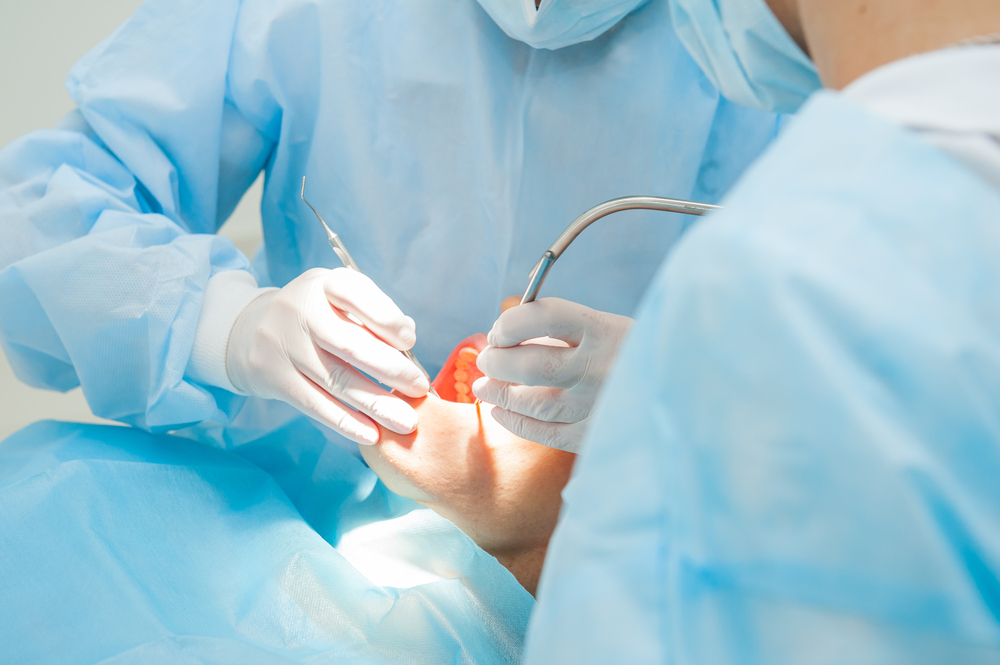
Oral surgery refers to any operation on your teeth, gums, mouth, or facial structures, and ranges from routine tooth extractions to more complex corrective jaw surgeries.
While more complicated surgeries require hospital time, the majority of oral surgeries are performed in a dental office setting under local anesthesia with minimal recovery time.
Oral surgery may be recommended to treat pain or infection, or restore facial functioning.
Examples include:
- Tooth extractions
Tooth extractions might be necessary in the case of severe tooth decay, gum disease, or to prevent overcrowding. Typically performed under local or general anesthesia, tooth extractions are the most common type of oral surgery and have relatively little recovery time.
- Dental Implants
Made to blend into your natural smile, dental implants are a common and preferred way to replace missing teeth. The implant is fused directly to the jawbone, giving the durability and appearance of a real tooth.
- Oral diagnosis and biopsies
Some oral diseases require a biopsy to confirm diagnosis. Biopsies are recommended when an abnormal lesion is found in the oral cavity, and involves removing cells from the lesion to be examined under a microscope.
- Corrective jaw surgery
Corrective jaw surgery corrects skeletal conditions of the jaw and face for functional and aesthetic purposes. Corrective jaw surgery can treat TMJ, misaligned bites like overbites and underbites, as well protruding or underdeveloped chins.
- Snoring and sleep apnea
Snoring and sleep apnea occur when a patient’s breathing is interrupted during sleep often due to excess tissue in the airways. Surgery is used to remove the excess soft tissue to restore proper breathing, so patients can return to a restful night’s sleep.
- Facial trauma and reconstructive surgery
Facial trauma happens after any blunt force to the face, including anything from car accidents to sports injuries that result in broken facial bones or damage to soft-tissue. Treatment restores facial structure and functions.
- Cleft lip/palate
Cleft lips and palates are congenital conditions defined by an opening in the upper lip or palate. Often affecting feedings, swallowing, and speech, surgery is performed to heal these openings.
If you are a candidate for oral surgery, your healthcare provider will walk you through the procedure, give you options for anesthesia, and answer any questions you may have. Recovery time will range depending on your procedure and any preexisting conditions you may have.